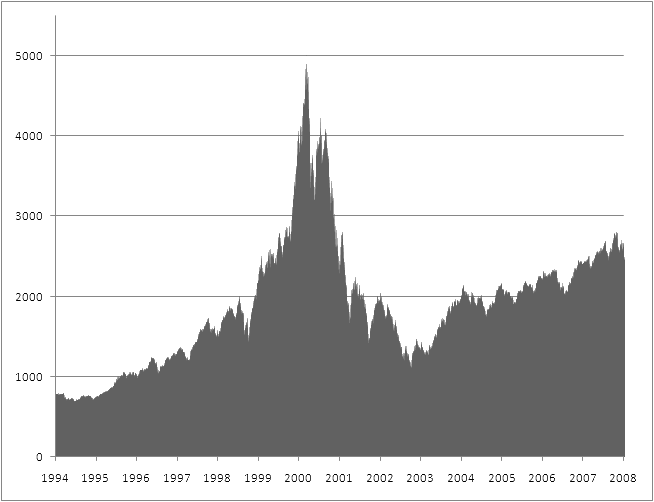
With the spark of the Browser wars there became a Dot-com bubble. Starting roughly in 1997, there was a speculative bubble where stock markets in industrialized nations saw their equity value rise rapidly from growth in the Internet sector and related fields. It is called the Dot-com bubble since during this period there was a large founding of new Internet-based companies commonly referred to as dot-coms. Companies were seeing their stock prices shoot up if they simply added an "e-" prefix to their name and/or a ".com" to the end, which one author called "prefix investing.” With a combination of rapidly increasing stock prices, market confidence that the companies would turn future profits, individuals speculated in stocks. These venture capitalists created an environment in which many investors were willing to overlook traditional financial measure in favor of confidence in the technological advancements.
In March 2000, the dot-com bubble burst. It was caused when in 1999 the U.S. Federal Reserve began to increased interest rates six times in order to slow the economy. A majority of the dot-coms ceased trading because they had burned through their venture capital money. Many never having made a profit because their strategy was "get big fast" therefore they offered their services or end product for free thinking that if they could build enough brand awareness, they could charge profitable rates for their services later. However, that was not the case. By 2001, the bubble's deflation was running full speed. A majority of the dot-coms had ceased trading, after having burnt through their money and venture capital, often without ever making a profit. Of all the hundred, if not thousands, of companies that started, only two companies were able to make it through. They were Amazon and Ebay.